A garage door that won't open, or won't stay closed, is the most common reason people call. The good news is that a handful of causes cover almost every case, and a few of them you can check yourself in five minutes. The rest involve parts under a lot of tension, so they're a job for a pro.
Safety first: if you heard a loud bang, see a gap in the spring above the door, or the door is hanging crooked, stop here. Don't pull the manual release cord with the door open, and don't try to lift it by hand. Call a garage door company.
Start with what the opener does when you press the button
The sound the opener makes, or doesn't make, tells you a lot.
- Nothing at all, no light, no sound. The opener has no power or no signal. Check that it's plugged in, try the outlet with a lamp, and look for a tripped GFCI outlet or breaker. Then try the wall button instead of the remote.
- The motor hums or clicks but the door doesn't move. This is the classic sign of a broken spring. The opener isn't built to lift the full weight of the door. It can also mean the door is frozen to the floor or the drive gear inside the opener is stripped.
- The door lifts a few inches and stops or reverses. The opener feels too much resistance. Common causes are a broken spring, a frozen seal, a bent track or a roller that's binding.
- The light comes on and the motor runs, but the door doesn't move. The trolley may be disconnected from the door. Someone may have pulled the red manual release cord. With the door fully closed, you can usually reconnect it by running the opener until the trolley clicks back in.
When the door won't close
A door that starts down and then goes back up is almost always a safety sensor problem. The two small sensors sit about six inches off the floor on each side of the opening. If anything breaks the beam between them, or if one of them gets bumped, the opener reverses as a safety feature.
- Clear anything from the doorway, including leaves, snow, recycling bins and spider webs.
- Wipe both lenses with a soft cloth.
- Check the indicator lights. On most brands one light is steady and the other blinks or goes out when the sensors are misaligned.
- Gently adjust the bracket until both lights are steady.
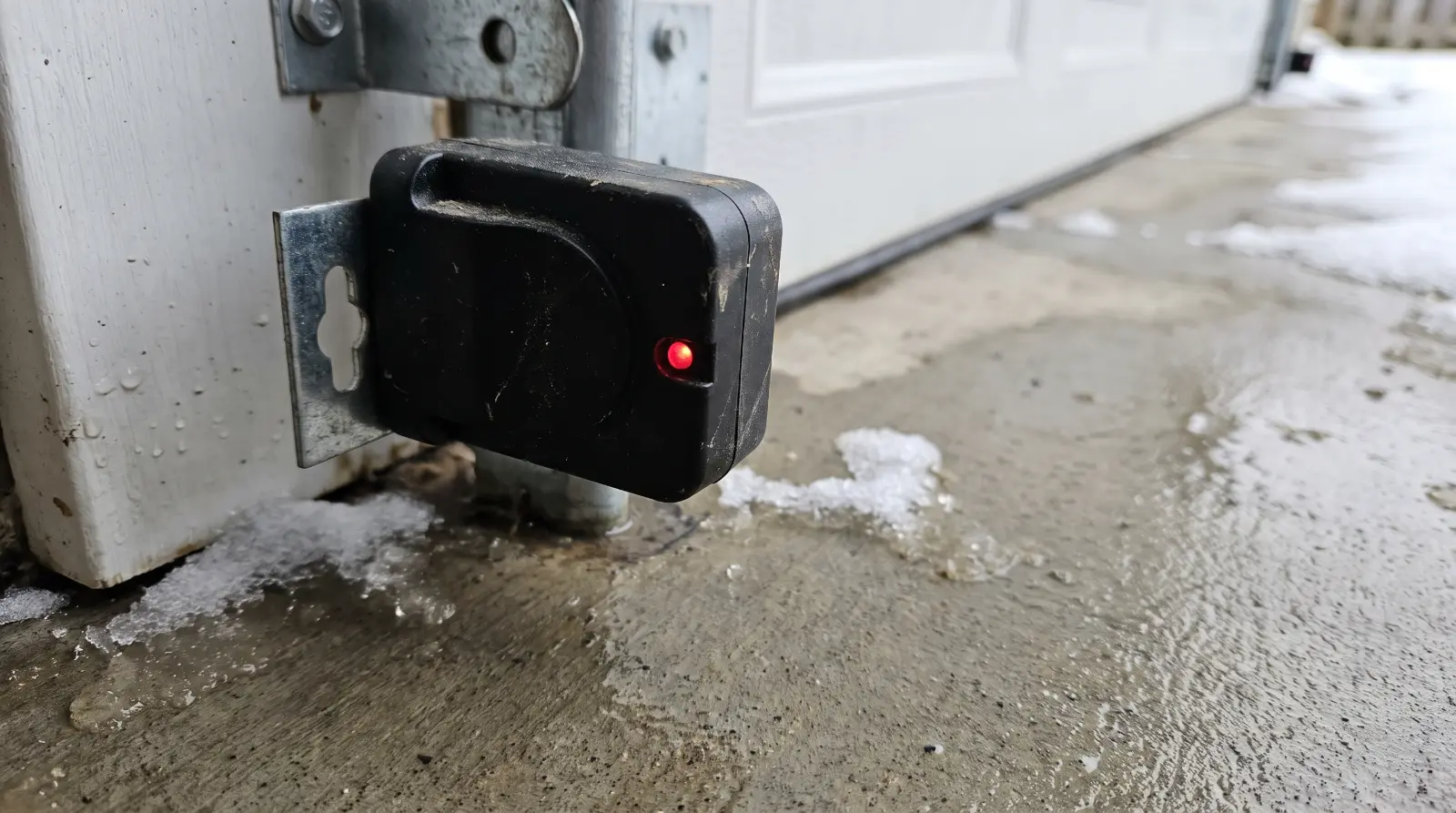
This happens a lot on Waterbury's hilly lots, where garage floors often slope toward the street and the sensor brackets get knocked by shovels and snow blowers. If the sensors check out and the door still reverses, the close force or travel limit on the opener may need adjusting, which a technician can do in a few minutes.
Winter problems that look like a broken door
Waterbury averages about 23 nights at or below freezing every January, and close to that in December and February. That cold creates its own set of problems.
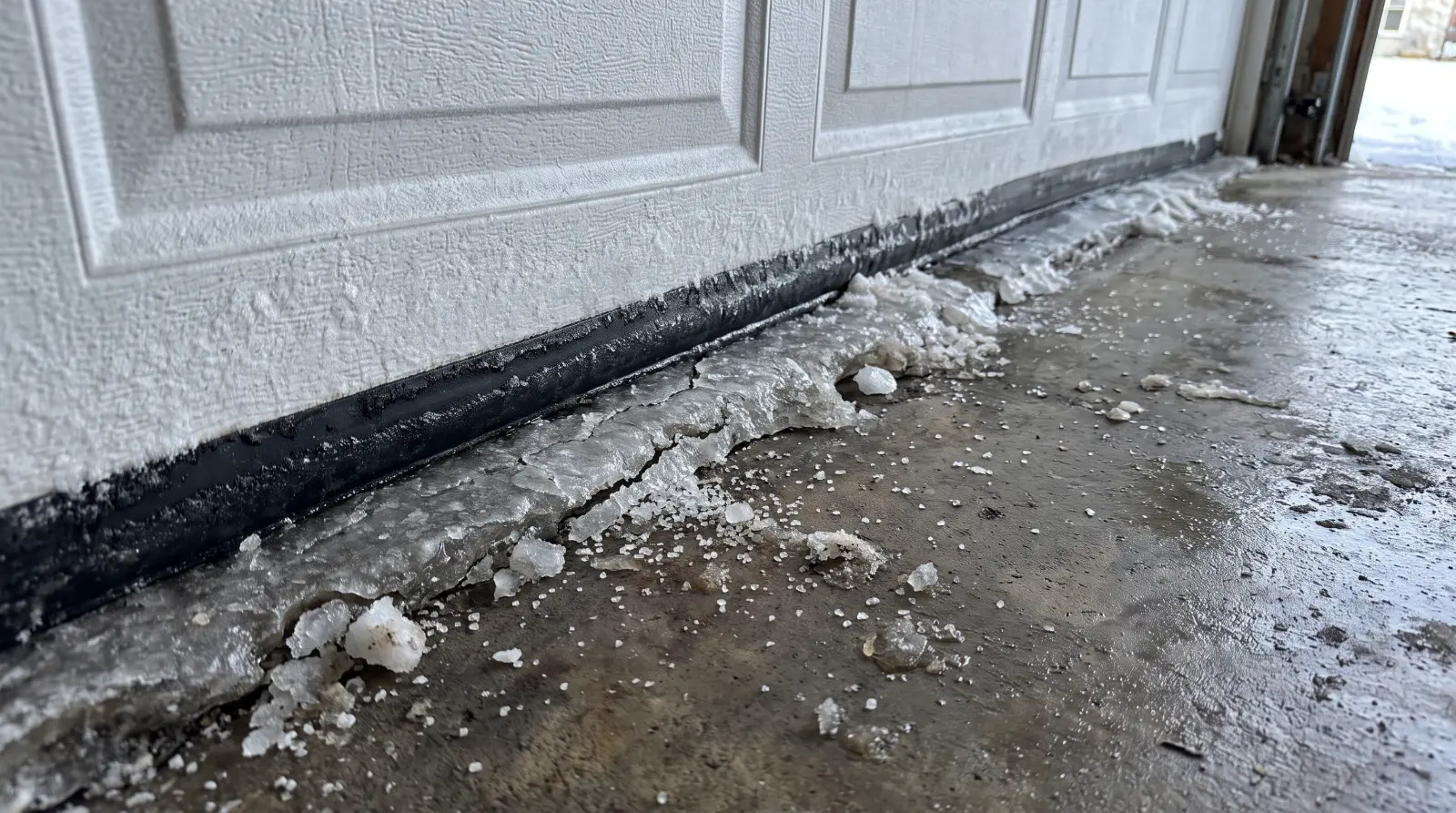
A frozen bottom seal. Snow melts off your car, runs under the door and refreezes overnight. The rubber seal is now glued to the slab. If you keep pressing the button, the opener can strip its gears or pull the door out of square. Instead, free the seal by warming it with a hair dryer or gently working a plastic scraper along the edge. Once it's free, spread a little sand or calcium chloride on the slab, not rock salt, which eats concrete and metal.
Stiff grease. Old grease in the tracks and on the rollers thickens in the cold and makes the door drag. Garage door tracks shouldn't be greased at all. A silicone or lithium spray on the rollers, hinges and springs is what most technicians use.
A spring that finally gives out. Springs are rated for a set number of open-and-close cycles. Cold steel is less forgiving, so a spring near the end of its life often breaks on a cold morning. If that's what happened, see our spring repair page.
What it usually costs
Most fixes for a door that won't open fall between about $175 and $375. Sensor realignment and minor adjustments are at the low end. A torsion spring replacement usually runs $192 to $371, according to This Old House. A new opener is more. The cost guide has the full table with sources.
Renting? Check with your landlord first
More than half of Waterbury's homes are rented, and a lot of them are two- and three-family houses with a shared or assigned garage. If you rent, look at your lease or call your landlord or property manager before booking a repair, since the owner is often the one who arranges and pays for it. Landlords with several doors across a few properties can ask the company to look at all of them on one visit.
When to call
Call a garage door company if the spring is broken, a cable is loose or frayed, the door is crooked, the opener hums without moving after you've ruled out ice, or the door simply won't respond after the checks above. Those parts are under hundreds of pounds of tension, and a mistake can cause a serious injury.
Common questions
Why does my garage door open a few inches and then stop?
Usually the opener senses too much resistance and quits to protect itself. A broken spring, a frozen bottom seal or a binding roller all cause it. Check the spring above the door first.
Why does my garage door go back up when I try to close it?
The safety sensors near the floor aren't seeing each other. Wipe the lenses, make sure nothing is in the beam, and check that both indicator lights are steady. Sloped floors can push them out of line over time.
The remote doesn't work but the wall button does. What's wrong?
Start with the remote battery. If that doesn't help, check whether the opener's lock or vacation mode is turned on at the wall control, and try reprogramming the remote using the learn button on the motor.
Can cold weather stop a garage door from opening?
Yes. Ice can freeze the bottom seal to the floor, grease in the tracks thickens, and worn springs are more likely to snap on a cold morning. In Waterbury these problems pile up from December through February.